

Aviation’s next challenge:growth without gridlock
Post-pandemic recovery lifts traffic, but infrastructure gaps and sustainability pressures threaten long-term growth
Aviation’s next challenge:growth without gridlock
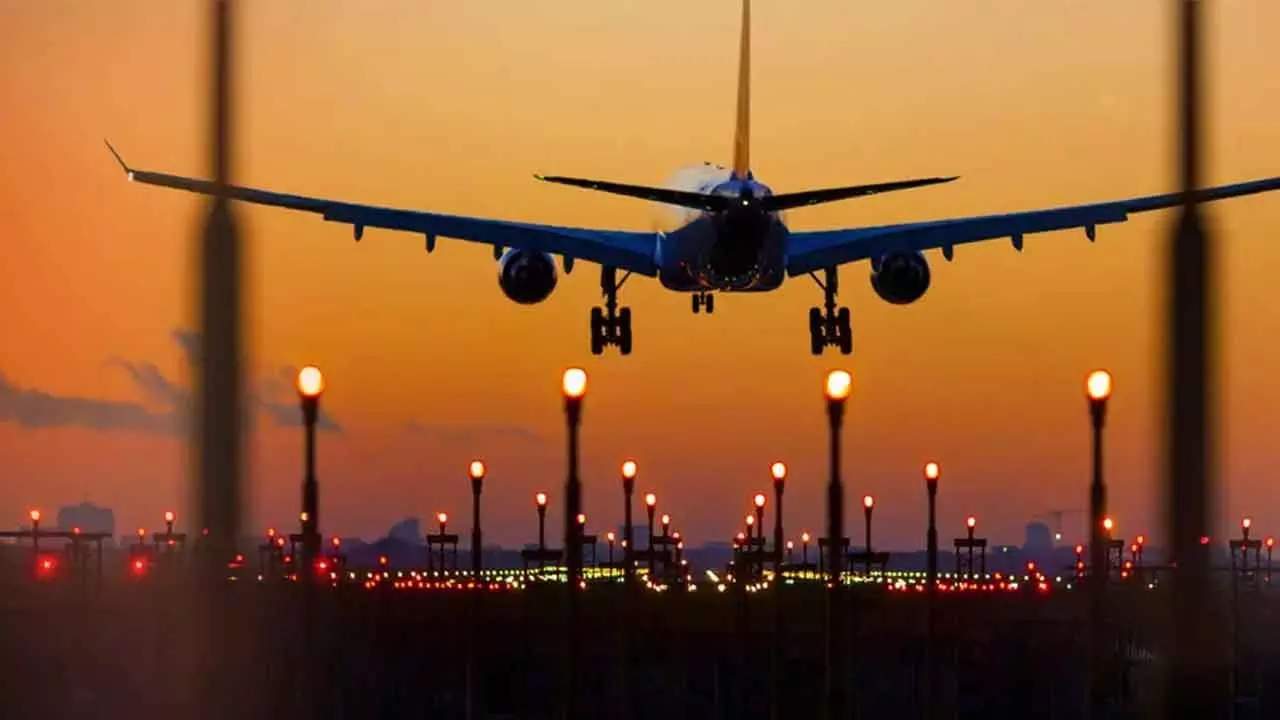
The global airport industry is witnessing a robust post-pandemic recovery, with passenger traffic forecast to reach 10.2 billion in 2026 and nearly double by 2045, driven largely by growth in emerging markets. While revenues are rebounding, the sector faces mounting capacity constraints, major infrastructure investment needs and an accelerating push towards sustainable operations, with a target of net-zero carbon emissions by 2050.
According to industry forecasts, global passenger traffic is expected to touch 10.2 billion in 2026, representing year-on-year growth of 3.9 per cent. Over the longer term, Airports Council International (ACI) World projects passenger numbers will rise to 18.8 billion by 2045, implying a compound annual growth rate of 3.4 per cent.
One of the biggest challenges for airports will be meeting aviation’s net-zero emissions goal by 2050, while simultaneously accommodating rapid growth in passenger numbers, which are expected to nearly triple to around 19 billion by 2040. Key challenges identified in the forecast include airport infrastructure limitations, aircraft delivery delays and increasing operational complexity arising from supply-chain disruptions, geopolitical uncertainty and sustainability mandates. ACI World warned these factors could create significant bottlenecks if investment and coordination fail to keep pace with demand.
“The forecast sends a clear signal to the global aviation community: long-term growth is not guaranteed without coordinated action,” said Justin Erbacci, director general of ACI World. “To accommodate rising demand, the industry must accelerate investment in airport infrastructure, airspace capacity and operational resilience, while strengthening collaboration across airports, airlines, governments, regulators and industry partners.”
Erbacci cautioned that insufficient action could directly affect passenger experience and economic outcomes. “Without collective action, capacity constraints will jeopardise the industry’s ability to meet projected demand, creating operational bottlenecks and affecting the quality and reliability of the passenger journey,” he said.
He added that underinvestment could also curb broader economic benefits. “Insufficient investment to meet projected demand would result in missed economic development opportunities at regional and national levels. Aviation plays a central role in global economic development, accounting for about 3.9 per cent of global GDP,” he noted.
ACI World stressed that ensuring the sector can absorb future demand sustainably is both an industry imperative and a wider economic necessity. Global trade, meanwhile, has shown surprising resilience despite a volatile trade policy environment. Air cargo has emerged as a critical enabler of rapid adaptation, helping goods move ahead of tariff deadlines and facilitating the rerouting of China’s exports to alternative markets. Air freight is also playing an increasingly important role in the expanding trade of AI-related goods.
Although trade growth may moderate in 2026, air cargo is expected to remain robust, supported by AI-driven investment, rising demand for high-value, time-sensitive shipments and the structural shift towards e-commerce. In times of uncertainty, when speed is crucial, air freight remains the preferred option. As a result, air cargo traffic is projected to grow by 2.6 per cent in 2026.
Regionally, Europe is expected to deliver the highest net profit, largely due to Turkey’s strong performance. The Middle East continues to post the highest profit margins, while Asia-Pacific remains the fastest-growing region. Latin America is showing signs of structural improvement. North America faces fresh headwinds, including stagnating domestic demand and operational constraints, but remains a key contributor to global industry profitability.
Sustainability remains a top priority for the airline and airport industry, which is firmly committed to achieving net-zero CO₂ emissions by 2050. However, key decarbonisation solutions are not scaling up fast enough. Sustainable aviation fuel (SAF) is projected to account for less than 1 per cent of total fuel consumption in 2026, highlighting the limitations of the current policy environment.
This challenge is compounded by the lack of harmonisation between CORSIA and multiple regional and national initiatives, which has led to policy fragmentation, higher costs and weaker emissions reductions. Policymakers, the industry argues, must demonstrate greater resolve in addressing the energy transition at a global level, enabling aviation to operate with both financial and environmental sustainability.





